Head injuries.
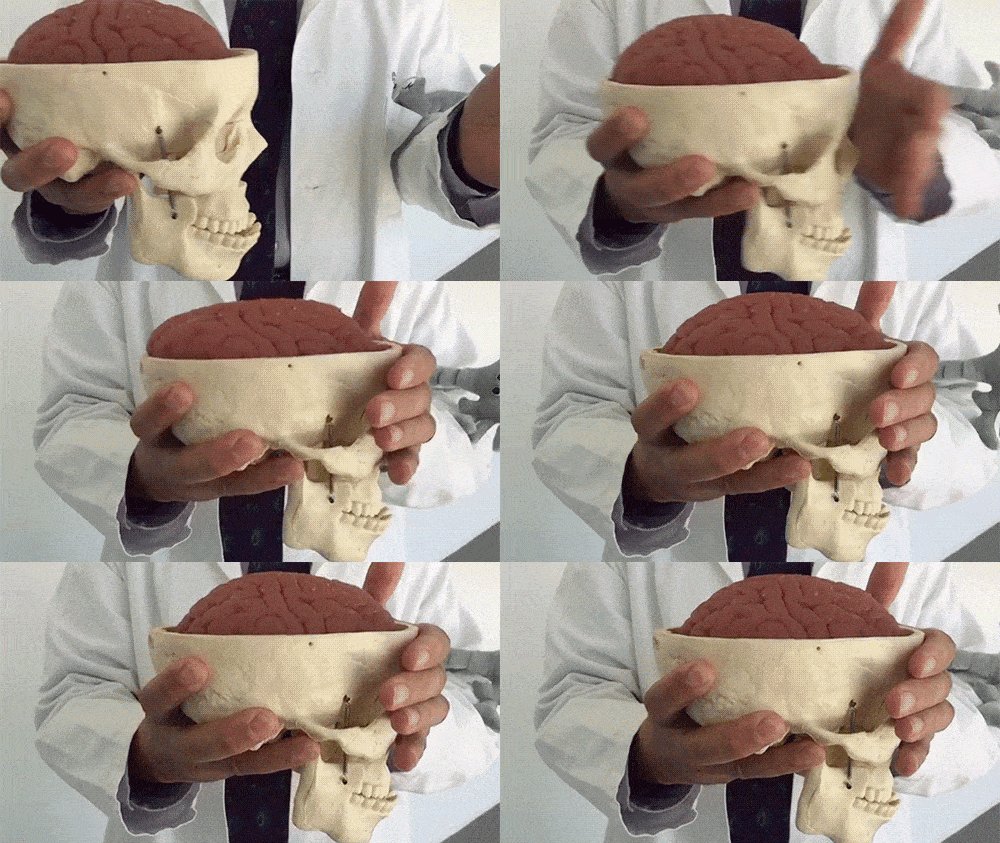
Which of the following statements best explain why we have a 4hr observation guideline for mild head injuries?

There is no single study looking at this time frame. It seems that the time frame has been accepted as a "reasonable" balance in those patients who are not getting an immediate cerebral CT.
What is a "contracoup" injury?
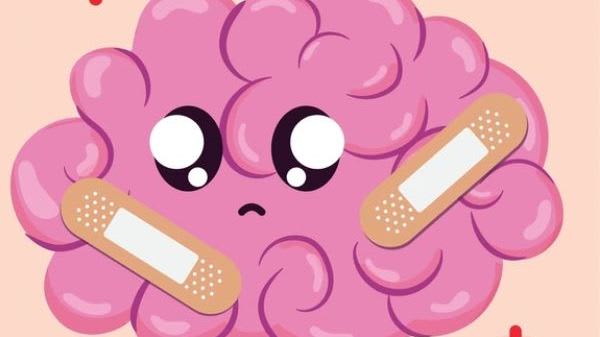
On impact the brain shifts and strikes the rigid skull bone opposite causing damage to the brain.
If you get concussed playing rugby league which of the following is CORRECT?
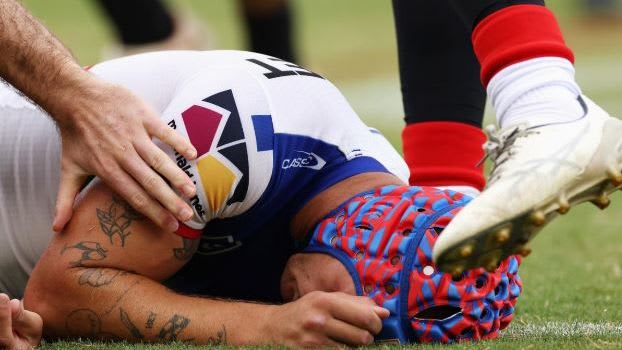
The timing varies a little around the world. A player with a confirmed concussion needs to go through a graded 6 stage protocol and be cleared by a doctor before returning to play.
Which of the following is INCORRECT about a cerebral CT scan?
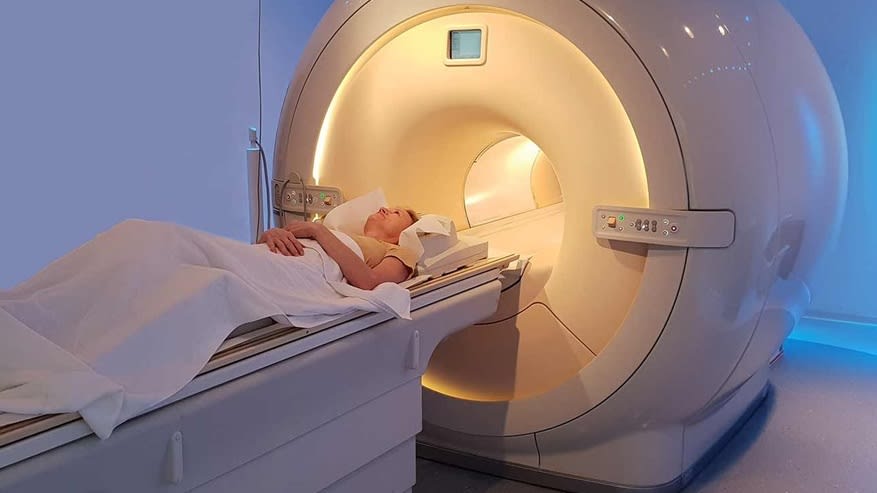
Cerebral Cts have improved and deliver less radiation than previously---but no---CTs use radiation by definition.
A 16yr old boy was struck over the head with a cricket bat. What does the CT show?
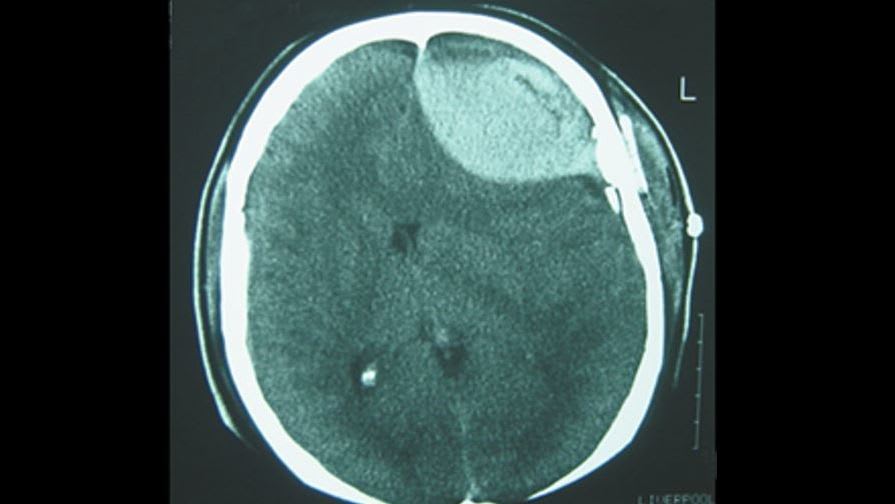
You can see the characteristic lens shape as the arterial bleed is pushing against the brain and is restricted by the skull sutures. Even though it is not on a "bone" window you can see the comminuted skull fracture.
The Canadian head CT rules can be used to guide whether you should do a cerebral CT in patients with mild head injury. Which of the following is NOT part of their rules?

Age is actually >65yrs. Get the MD Calc App and you can see the full inclusion and exclusion criteria. It's not perfect but still very good.
Which of the following is INCORRECT about "Shaken baby syndrome"?
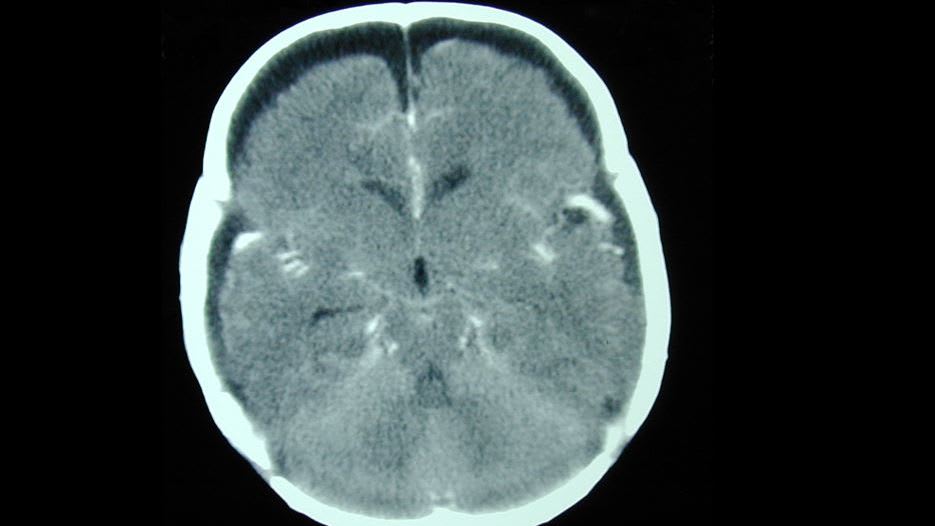
It occurs most often in babies<6mths age.
What does this CT show?
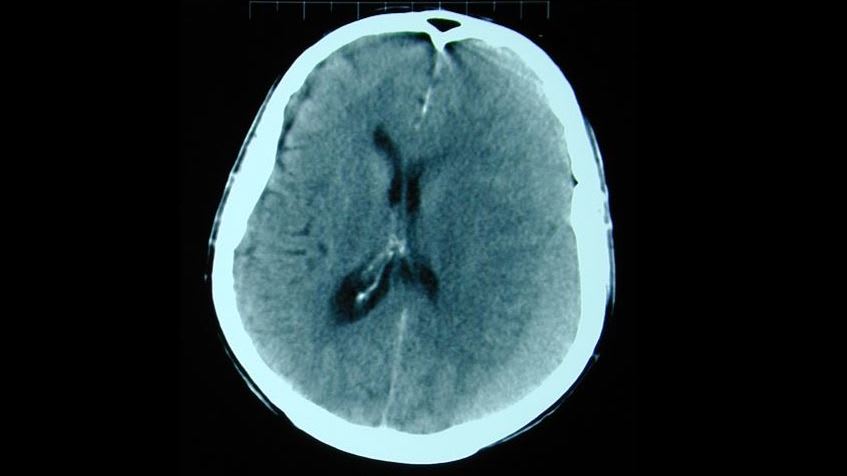
The bleed occured 10 days ago. The blood is being broken down which changes it's density and therefore it's appearance on CT. It has the characteristic curvilinear shape of a subdural haematoma which is caused by rupture of the bridging veins in the subdural space following a head injury.
In a patient intubated following an isolated head injury which of the following would NOT be reasonable to do?

Recommendations are to keep the PaC02 around 35mmHg rather then hyperventilating the patient to a lower PaC02.
Phineas Gage in 1848 suffered an injury whilst a foreman on a railway. Why was he famous?
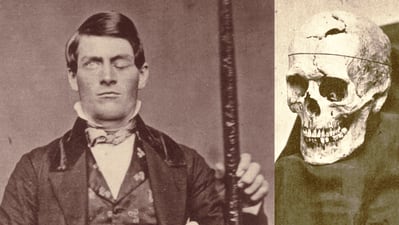
A bizzare story of survival and personality change. Below is a link to one of the many articles about him.